
Thursday, March 18, 2010

Mud Season in Vermont

Early mud season in Cambridge.

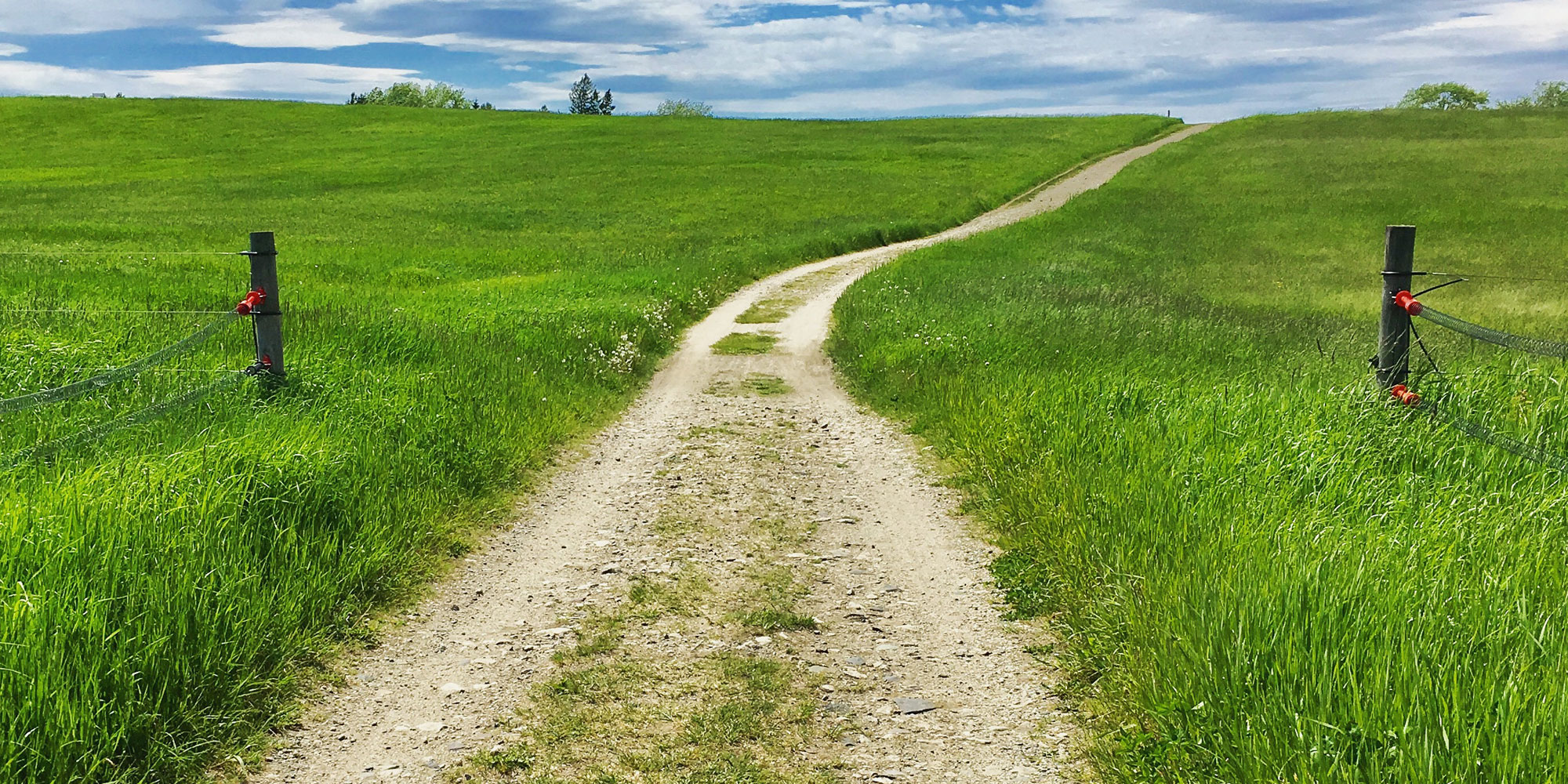
Dirt roads in Vermont can be tricky to navigate during mud season. As soon as the spring thaw arrives, these otherwise sturdy roads become a bit soft and rutty.

Mud season falls between late winter and early spring, and it's sometimes called Vermont's fifth season (there's also stick season in late fall). I've only driven on a handful of dirt roads over the past couple of weeks, and most have been pretty easy to travel.

Sooner or later though, I'm sure I'll come across one that is somewhat challenging. When this happens, I'll take a deep breath and resist fighting the ruts. Eventually, they'll take me where I want to go.

Monday, March 15, 2010

Maple Sugaring at Bragg Farm

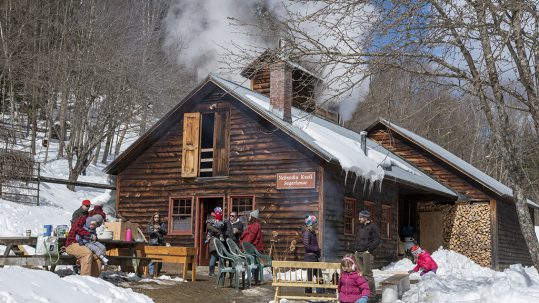
Doug Bragg works in his sugarhouse in East Montpelier.

Doug Bragg of Bragg Farm Sugarhouse is optimistic about this year's maple season. The weather in Vermont is cooperating with freezing nights and warm, sunny days, and Bragg is already spending most his waking hours boiling sap in the sugarhouse.

Bragg Farm is the only public sugarhouse in Vermont that still relies 100 percent on traditional sap buckets and wood fires to produce maple syrup. With 2,220 sap buckets and 50 acres of maple trees, the farm produces about 700 gallons of maple syrup each season.

The family began producing maple syrup in the 1700s, when Bragg's ancestors relocated to Warren, Vermont from Brookfield, Massachusetts. The farm was moved in the 1960s to East Montpelier, where it's been ever since.

Bragg Farm is open year-round and includes a gift shop and ice cream parlor. The farm is located on Route 14 in East Montpelier and offers free guided tours to visitors. For more information, visit www.braggfarm.com.

If you're interested in visiting a variety of maple sugarhouses around the state, come to the 9th annual Vermont Maple Open House Weekend March 26-28. For details, visit vermontmaple.org.


Thursday, March 11, 2010

Pieces of History in Harriman Reservoir

Harriman Reservoir in February.

The size of Harriman Reservoir is impressive, but its history is what grabs your attention. Along the reservoir's floor are remnants of an old logging village that was flooded in the 1920s when the Deerfield River was dammed to generate power.

Harriman Reservoir, also known as Lake Whitingham, is the largest body of water located entirely within the state of Vermont. Enjoyed by boaters, swimmers, paddlers, and fishermen, the reservoir extends about 10 miles from Wilmington to Whitingham in southern Vermont.

The scenic reservoir is owned by TransCanada and is a source of hydroelectricity. Originally developed by the New England Power Company in 1922-23, the reservoir flooded the former pulpwood and lumber village of Mountain Mills, located just outside of Wilmington.

When water levels are low, you can occasionally spot submerged tree stumps and foundations from Mountain Mills. How extraordinary would it be to come across this forgotten little village?

An old postcard of Mountain Mills (courtesy of the Town of Wilmington).

An aerial view of Harriman Reservoir.

Monday, March 8, 2010

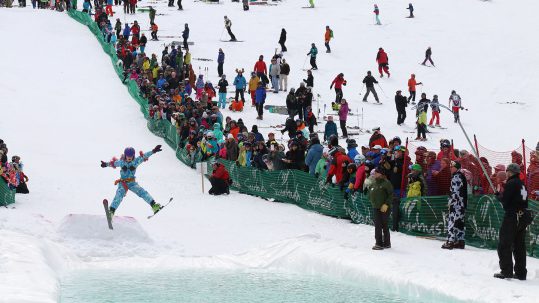
Spring Skiing in Vermont

Smugglers' Notch in Jeffersonville, Vermont.

Some of Vermont's best skiing and riding can be found in March. The snow is soft and the sun is warm, making conditions ideal for classic spring skiing.

March tends to be Vermont's snowiest month, but it varies from year to year. Still, most Vermont resorts will likely offer skiing and riding until early April, with some of the higher peaks staying open even later.

Are you planning on going skiing or snowboarding this spring? Let me know where you end up.

For up-to-date conditions, visit www.skivermont.com.

Thursday, March 4, 2010

A Stone Wall in Ripton


This stone wall at Middlebury College's Bread Loaf School of English always catches my eye.

At least once a year I take a leisurely drive along Route 125, a scenic route also known as Middlebury Gap Road. During these drives, I always stop at the college's Ripton campus to admire the stone wall and rolling landscape.

David Bain, of Middlebury College's Department of English and American Studies, says the stone wall was likely built in the 1880s, back when Bread Loaf was a summer resort.

Bread Loaf is now a summer destination for graduate students, and it continues to be a place worth exploring.

Monday, March 1, 2010

Town Meeting in Vermont

Town Hall in Goshen, Vermont

Town Meeting, held the first Tuesday in March, is an annual tradition in Vermont. Residents gather in town halls and school gymnasiums around the state to vote on local budgets, debate community issues, and elect town officials.

Attendance at Town Meeting has unfortunately been on the decline for the past 40 years. According to University of Vermont Professor Frank Bryan, a typical meeting draws only about 20 percent of voters, but small towns tend to have higher turnouts.

Town Meeting has been an important part of Vermont's history and identity for more than 200 years. The first Town Meeting was held in Bennington in 1762, several years before Vermont became the 14th state.

Interesting and controversial topics are part of the mix at Town Meeting, and this year will be no exception. For Town Meeting coverage, visit Vermont Public Radio at www.vpr.net.

Thursday, February 25, 2010

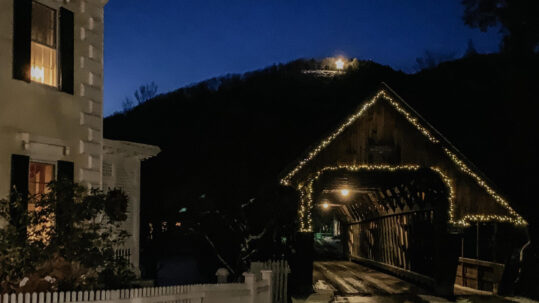
Village Bridge in Waitsfield


The Village Bridge in Waitsfield is one of my favorite covered bridges in Vermont. The bridge, built in 1833 and restored in the 1970s, spans the Mad River. This is one of the oldest covered bridges in Vermont and includes a pedestrian walkway.

Vermont has about 100 covered bridges across the state. An informative website with details about Vermont's covered bridges is www.virtualvermont.com.